When you sell a home, the photos do the first job. A strong set makes the buyer stop, open the listing, and book a viewing. A weak set gets skipped, however good the home is.
According to NAR's Real Estate in a Digital Age report, virtually all home buyers use the internet in their search, and they rate photos the single most useful feature on a listing page [1]. In VHT Studios' data, professionally photographed homes sold 32% faster — 89 days on the market versus 123 [2]. Redfin found that homes shot with a DSLR sold for $3,400 to $11,200 more than comparable listings shot on a phone [3], and the same study's eye-tracking showed buyers spend by far the most time on the photos [4].
I've photographed homes in Kotka and the surrounding towns, and the same things come up again and again. These seven points separate a listing that works from an average one.
The cover photo decides whether the listing gets opened
Search results usually show just one photo and a price. That single frame decides whether the buyer clicks the listing open or scrolls past. So the cover should be the listing's strongest image: a bright living room, a spacious kitchen, or the view from the balcony — not the hallway or the bathroom.
I often choose the cover photo while I'm still on site. It's the same image that later carries the social media post and the brochure, so it's worth the most attention.
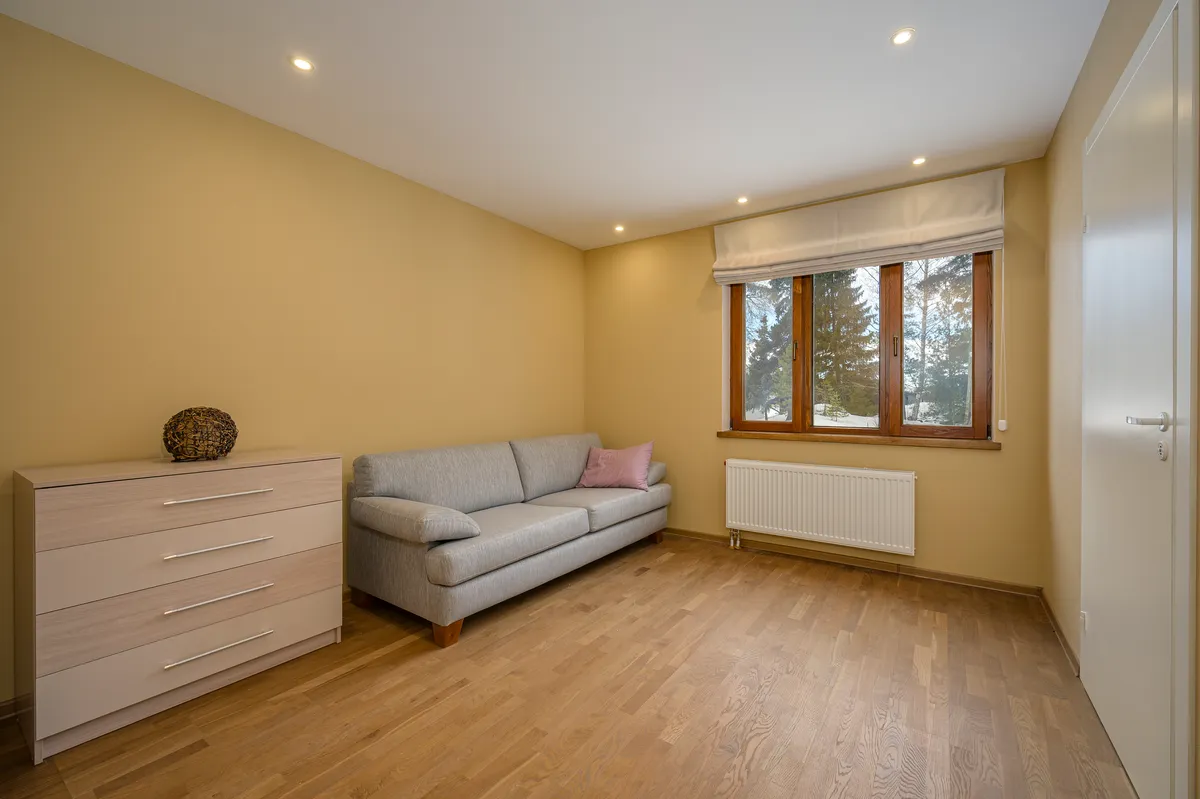
Dozens of listings compete in the search results. The buyer decides in seconds, and the cover photo makes that decision.
Light matters more than furniture
The single most important factor in a property photo is light. Natural light makes rooms feel open and keeps colours true, while ceiling lights alone flatten the image and turn the tones yellow. So I pick the shooting day and the time of day by when the light reaches the main rooms best.
In practice, curtains are opened, indoor lights are balanced, and windows are cleaned before the shoot. Even slight haze on the glass shows up instantly against the light.
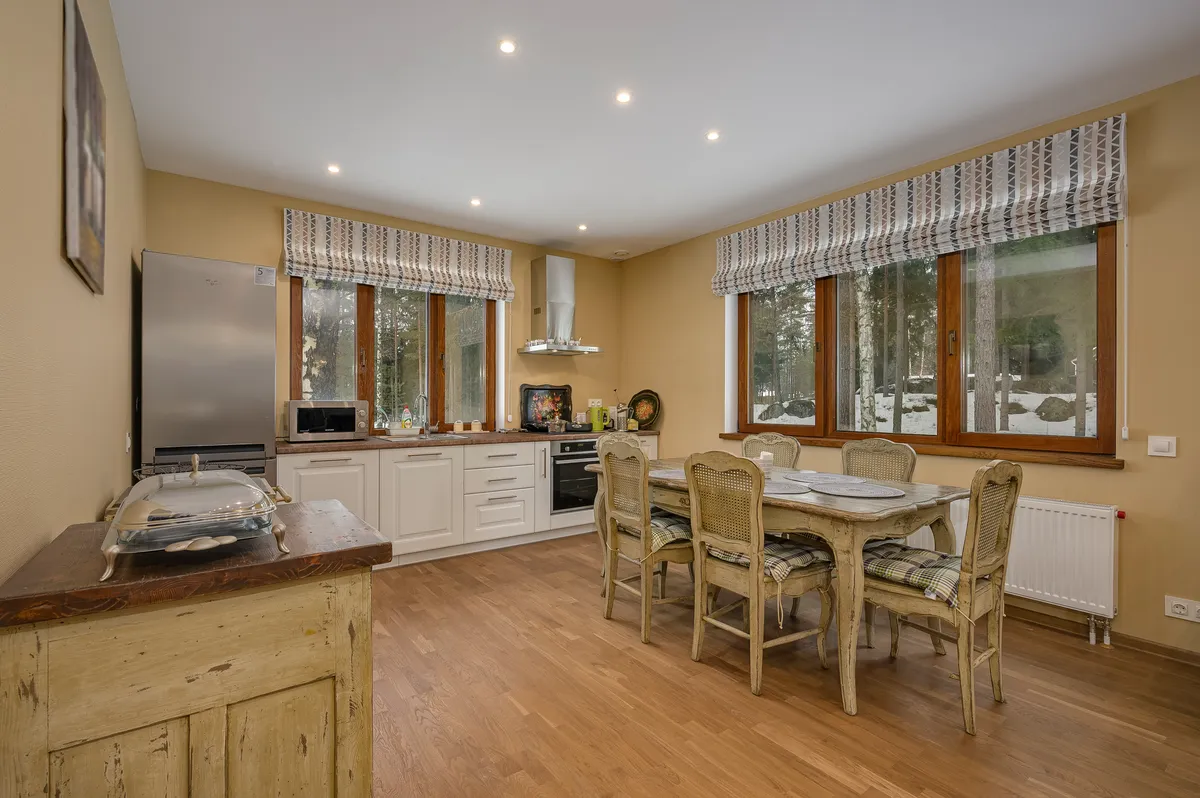
Tidy and declutter before the shoot
Much of a good property photo is made before the camera comes out. Mail left on the counter, tangled cables, fridge magnets, and personal items pull attention away from the space itself. The buyer should be able to picture their own life in the home, not the current resident's everyday.
I put together a more detailed preparation guide on the site. Going through it before the shoot raises the result more than any single camera setting.
The right angle shows the space honestly
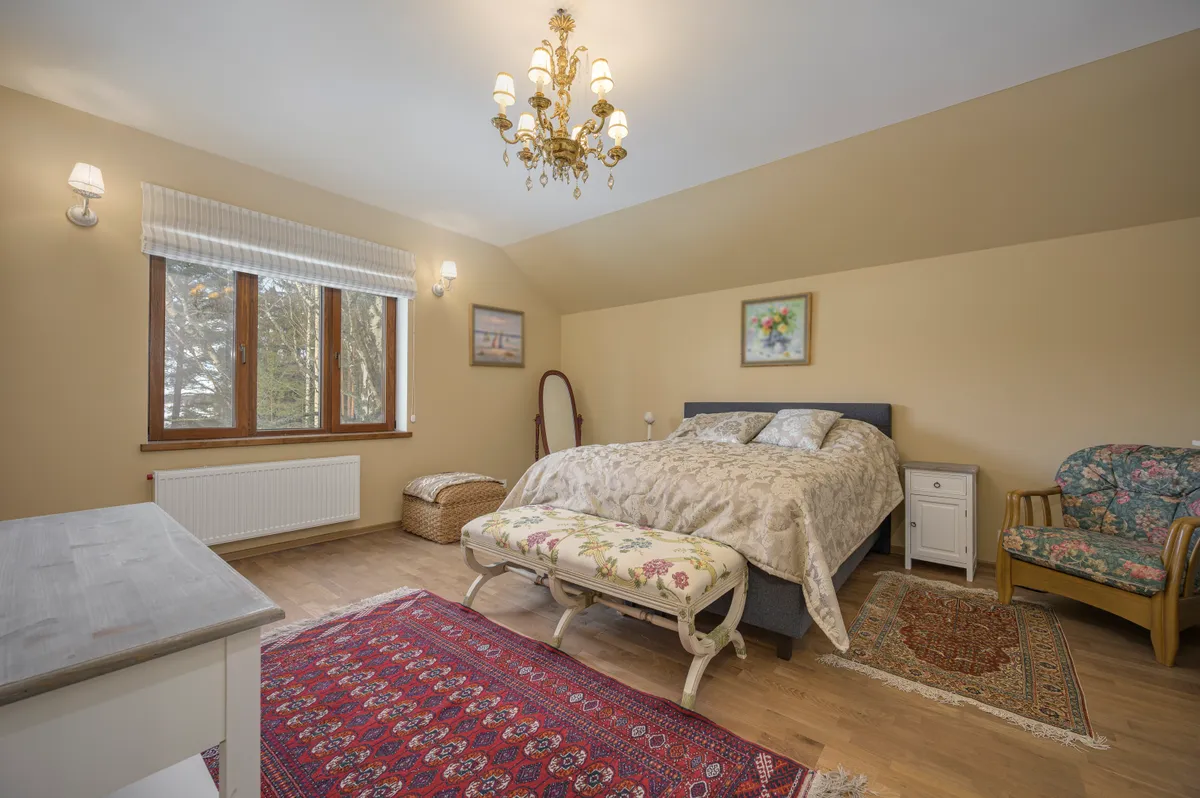
Too wide a lens stretches rooms to look bigger than they are. It can earn clicks, but the buyer notices the difference at the viewing and feels let down. A good property photo shows the true scale of the space, from the right height and with straight lines.
Vertical lines are kept straight and the camera level. A leaning wall or a tilted door is a small mistake that makes an otherwise good photo look careless.
Show the location: an aerial photo tells the surroundings
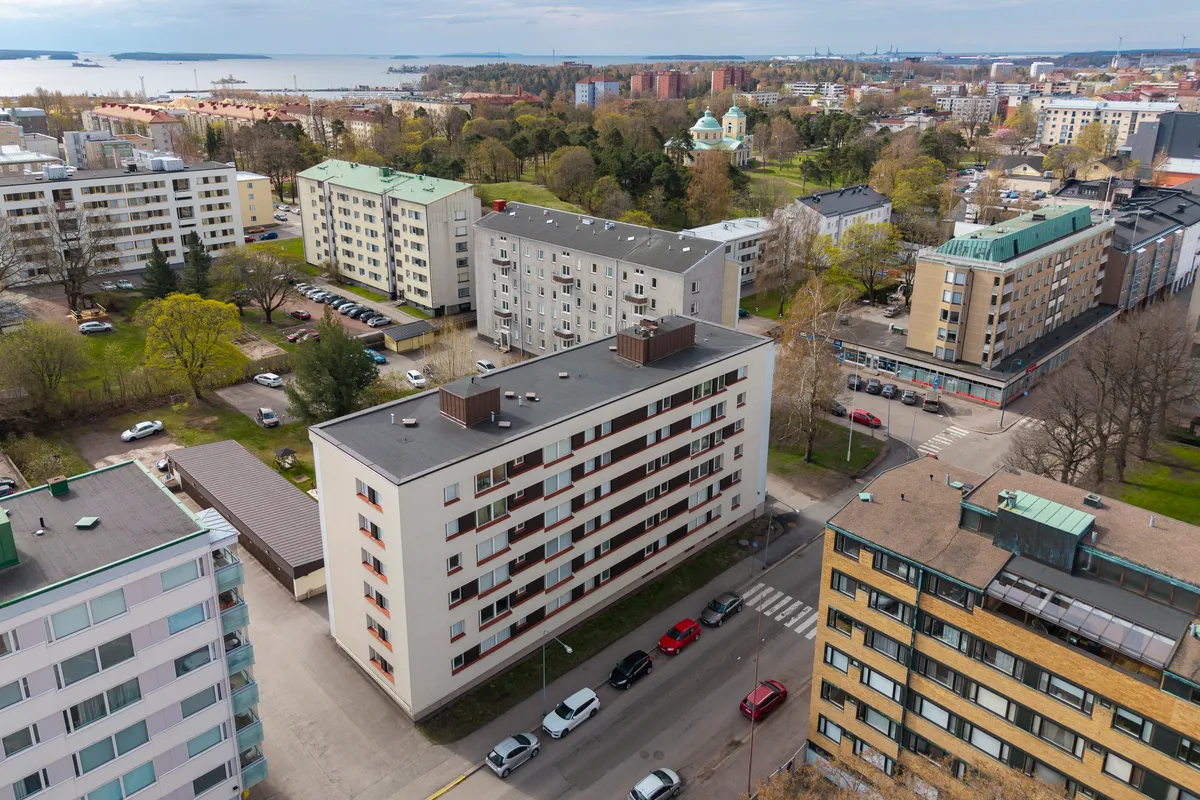
A large part of a home's value is its location, but interior photos say nothing about it. One aerial photo shows at once where the property sits, how close the shore, park, or services are, and what surrounds the building.
An aerial shot suits properties whose strength is location especially well: proximity to the sea or a river, a green yard, or a short walk to the centre. It's often the very image that sets a listing apart from the one next to it.
Enough photos, but each one different
A home listing usually needs 15 to 25 good photos. What matters is not the count but that each photo says something new: one strong shot of every room and a couple of the key spaces. The same room from five angles fills the gallery but adds no information.
It's worth including a floor plan. It helps the buyer understand how the rooms connect and cuts down on questions before the viewing.
Phone or professional
Phone cameras are good, and you can shoot a bright room with one well enough. The difference shows in the hard situations: against the light in front of a window, in a dim hallway, or when both the interior and the view through the window need to be exposed correctly in the same frame.
A professional's work comes down to more than the camera: knowing the angle to shoot a space from, how to control the light, and which photos to choose for the listing. Selling a home is often a deal worth tens of thousands of euros, and the photography is a small cost against that — one that shows directly in the time on market and the final price.
Ready to have your home photographed for sale?
Interior and exterior photography by a professional, delivered within 48 hours. Home packages from €155 (incl. VAT 25.5%). Add drone, a floor plan, or a 360° virtual tour as needed.
References
- National Association of Realtors. Real Estate in a Digital Age. NAR report indicating that virtually all home buyers use the internet in their search and rate photographs the most useful feature on a listing site. nar.realtor
- VHT Studios (2018). Professional Real Estate Photography Sells Homes 32% Faster. Analysis of the Chicago market showing professionally photographed listings sold in 89 days on average, versus 123 days for the rest. prnewswire.com
- Redfin Research, cited via Snappr. Impact of Professional Photography on Listing Sale Price. Study showing DSLR-photographed homes sold for $3,400–$11,200 more than comparable listings shot with smartphones. snappr.com
- Redfin Eye-Tracking Study, cited via HomeJab. How Buyers Look at Listing Photos. Eye-tracking research showing buyers spend around 60% of their listing review time on photographs. homejab.com